Welcome to Our Company




 Send Inquiry
Concrete Testing Equipment
Price 230000 INR/ Unit
MOQ : 1 Unit
Concrete Testing Equipment Specification
- Hardness
- 65 HRC
- Response Time
- <1 second
- Max Height
- 950 mm
- Automation Grade
- Semi-Automatic
- Number of Specimens
- 1
- Features
- Automatic Data Logging, Overload Protection, Safety Alarm
- Humidity
- 20% 80% RH
- Resolution
- 0.01 kN
- Power Supply
- Electric
- Frequency
- 50/60 Hz
- Voltage
- 220-440 Volt (v)
- Port Size
- 1/2 inch
- Specimen Size
- 150 x 150 x 150 mm (Cube)
- Gas Pressure
- 0.6 MPa
- Temperature
- 5C 40C
- Accuracy
- 1%
- Product Type
- Concrete Testing Equipment
- Application
- Industrial Concrete Strength Testing
- Measuring Range
- 0 2000 kN
- Mounting Type
- Floor Standing
- Usage
- Industrial
- Operating Voltage
- 220-440 V
- Color
- Silver and Blue
- Display Type
- Digital
- Interface Type
- RS232/USB
- Test Range
- 0 2000 kN
- Equipment Type
- Concrete Testing Equipment
- Capacity
- 2000 kN
- Machine Weight
- 85 kg
- Test Speed
- 0.05 - 50 mm/min
- Test Width
- 200 mm
- Test Stroke
- 100 mm
- Control Mode
- Digital/Manual
- Software Compatibility
- Windows & Linux
- Finish
- Powder Coated
- Safety Features
- Emergency Stop, Protective Shield
- Mobility
- Wheeled Base
- Material
- Mild Steel
Concrete Testing Equipment Trade Information
- Minimum Order Quantity
- 1 Unit
- Payment Terms
- Cash Advance (CA)
- Supply Ability
- 30 Units Per Month
- Delivery Time
- 7 Days
- Main Domestic Market
- All India
Concrete Testing Equipment About
In order to assess the strength and quality of concrete in industrial applications, Concrete Testing Equipment is necessary. These silver and blue devices, which are usually powered by an electric supply (220-440 volts), are guaranteed to be precise and long-lasting. Digital readouts, load cells, and hydraulic pumps are essential parts for precise assessment of attributes like durability, uniformity, and compressive strength. These tools, which were created using cutting-edge engineering and manufacturing methods, are frequently utilised in the materials testing, civil engineering, and construction sectors. By offering trustworthy data, guaranteeing standard compliance, averting structural failures, and maximising the quality of concrete used in building projects, they help clients.
Reliable Performance and Durability
Engineered with mild steel and finished in silver and blue powder coating, this equipment promises enduring service even in rigorous industrial settings. It is floor-mounted, semi-automatic, and fitted with a strong wheeled base for practical relocation. A digital display and intuitive controls simplify complex testing, while a hardened structure ensures both safety and longevity, making it suitable for Indias diverse concrete testing applications.
Advanced Safety & Software Compatibility
The device integrates emergency stop functionality and protective shields to prioritize user safety throughout operation. Automatic alarms and overload protection add further safeguards. Integration with both Windows and Linux platforms, coupled with RS232/USB interfaces, facilitates seamless data transmission and analysis, supporting up-to-date industrial requirements for documentation and calibration control.
FAQs of Concrete Testing Equipment:
Q: How does the emergency stop feature enhance operator safety during testing?
A: The emergency stop function provides immediate machine shutdown in hazardous situations, ensuring quick response to unforeseen issues. This, alongside the protective shield, safeguards users from potential risks during severe load testing conditions.Q: What process should be followed for calibration, and is it possible to use pre-installed settings?
A: The equipment supports both manual calibration and the use of pre-installed calibration parameters. For manual calibration, follow the manufacturers guide and utilize the digital control interface for precise tuning before initiating tests.Q: Where can this concrete testing equipment be installed and relocated?
A: This machine is designed for floor-standing placement and features a wheeled base, allowing convenient relocation within laboratories, industrial test sites, and manufacturing facilities as needed.Q: What is the main benefit of automatic data logging and digital display?
A: Automatic data logging ensures all measurements are recorded accurately and securely without manual intervention, minimizing errors. The digital display provides real-time test data and quick response (<1 second), streamlining result interpretation for operators.Q: When should you perform a specimen test, and what type is compatible with this equipment?
A: Specimen testing is recommended whenever concrete strength must be assessed for quality assurance or compliance. This equipment is compatible with 150 x 150 x 150 mm cube specimens and can test one sample at a time.Q: How does this equipment ensure test accuracy and repeatability?
A: With a measuring range up to 2000 kN, resolution of 0.01 kN, and accuracy of 1%, this system provides precise and repeatable results, supported by robust digital/manual controls and high-quality construction.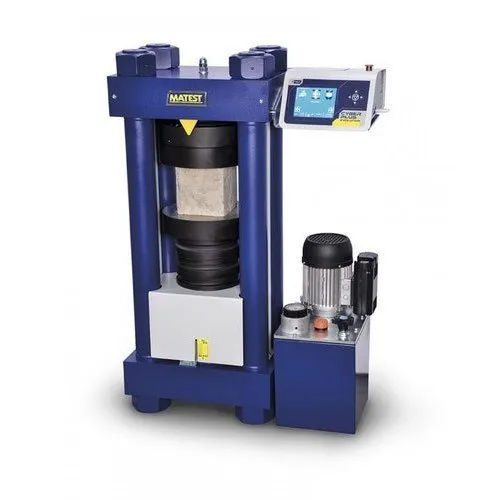
Tell us about your requirement

Price:
Quantity
Select Unit
- 50
- 100
- 200
- 250
- 500
- 1000+
Additional detail
Mobile number
Email

More Products in Civil Laboratory Testing Instruments Category

Automatic Titrator
Price 370000 INR / Unit
Minimum Order Quantity : 1 Unit
Usage : Industrial
Power Supply : Electric
Machine Weight : 12 kg
Measuring Range : 0.001 to 100 g/L
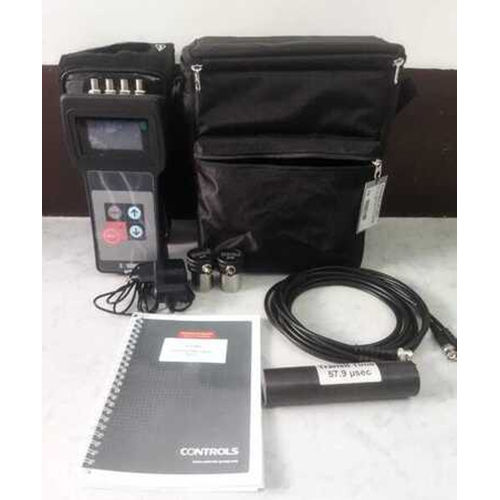
CONTROLS ULTRASONIC PULSE VELOCITY TESTER
Price 180000 INR / Kit
Minimum Order Quantity : 1 Millimeter
Usage : Material flaw detection, strength estimation, uniformity evaluation
Power Supply : Rechargeable Liion battery, 12V DC / optional AC adapter
Machine Weight : Approx 2.5 kg (complete instrument with transducers)
Measuring Range : 0.1 m/s to 4000 m/s
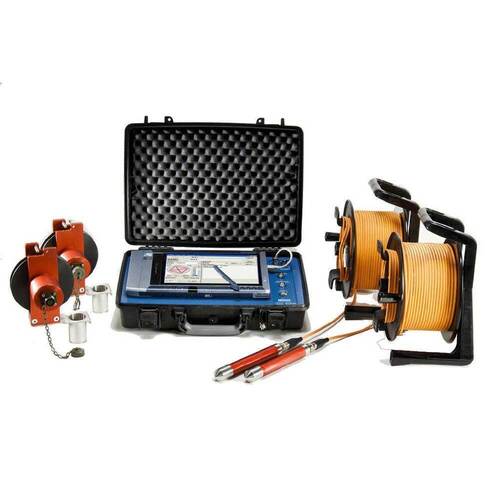
CHUM (CROSS HOLE ULTRASONIC MONITOR)
Price 2500000 INR / Kit
Minimum Order Quantity : 1 Meter
Usage : Structural quality assessment of deep foundation elements
Power Supply : Rechargeable LithiumIon Battery, AC Adapter 100240V, 50/60 Hz
Machine Weight : 2.5 kg
Measuring Range : 0.5 m to 100 m (longitudinal)

LABORATORY FURNACE
Price 50000 INR / Set
Minimum Order Quantity : 1 Degrees Fahrenheit
Usage : Laboratory thermal processing
Power Supply : 230V AC, 50 Hz
Machine Weight : Approx. 2025 kg
Measuring Range : Ambient to maximum temperature

Contact Details

- 313/7, Nabapally, Nawbhanga, Salt Lake, Sector- 4,Kolkata - 700105, West Bengal, India
- Phone : 08045476896
ADRIJA SCIENTIFIC INSTRUMENT COMPANY
GST : 19EWWPD9150E1Z1
GST : 19EWWPD9150E1Z1

- Mr. Koushik Das (Business Head)
- Mobile : 08045476896
- Send Inquiry
 Send Inquiry
 Send Inquiry
 Send SMS
ADRIJA SCIENTIFIC INSTRUMENT COMPANY
All Rights Reserved.(Terms of Use)
Developed and Managed by Infocom Network Private Limited.
Developed and Managed by Infocom Network Private Limited.

