Welcome to Our Company




 Send Inquiry
CHUM (CROSS HOLE ULTRASONIC MONITOR)
Price 2500000 INR/ Kit
MOQ : 1 Meter
CHUM (CROSS HOLE ULTRASONIC MONITOR) Specification
- Operating Voltage
- 12V DC (via internal battery)
- Specimen Size
- Any bored pile or diaphragm wall structure
- Max Height
- No inherent limit (depends on tube length)
- Humidity
- 0 to 95% RH (non-condensing)
- Temperature
- -10°C to +50°C
- Port Size
- Compatible with industry standard access tubes (38 mm to 50 mm ID)
- Measuring Range
- 0.5 m to 100 m (longitudinal)
- Mounting Type
- Handheld or tripod mount
- Application
- Integrity test of deep foundations (bored piles, diaphragm walls, drilled shafts)
- Interface Type
- USB 2.0, Wi-Fi, Bluetooth
- Resolution
- 0.1 mm
- Accuracy
- +/- 1 mm (transit time)
- Automation Grade
- Semi-automatic
- Equipment Type
- Cross Hole Ultrasonic Monitor
- Power Supply
- Rechargeable Lithium-Ion Battery, AC Adapter 100-240V, 50/60 Hz
- Features
- Dual-probe system, Automatic and Manual mode, Real-time data display, Data storage, Portable
- Test Range
- 0.5 m to 100 m
- Number of Specimens
- Multiple tubes (multi-channel support)
- Display Type
- Large color capacitive touchscreen
- Response Time
- Real-time acquisition
- Frequency
- 50 kHz (nominal ultrasonic transducer frequency)
- Usage
- Structural quality assessment of deep foundation elements
- Capacity
- Up to 16 parallel channels
- Machine Weight
- 2.5 kg
- Test Speed
- Up to 5 sec per channel
- Test Width
- 50 mm to 2000 mm (diameter of structure)
- Test Stroke
- Full length of access tubes
- Control Mode
- Automatic & Manual
- Calibration
- Automatic and manual (user selectable)
- Probe Cable Length
- Standard 50 m, option up to 100 m
- Synchronization
- Automatic probe synchronization
- Transducer Material
- PZT ceramic
- Language Support
- Multi-language (English, Spanish, Chinese, etc.)
- Waveform Display
- Real-time A-scan and B-scan
- Waterproofing
- Probe and cables: IP67 rated
- Battery Life
- Over 8 hours continuous use
- Data Storage Capacity
- 16 GB internal memory, expandable via USB
- Report Generation
- Automatic PDF report export
- Software Compatibility
- Windows, Android, iOS (data review & report generation)
CHUM (CROSS HOLE ULTRASONIC MONITOR) About
CHUM (Cross Hole Ultrasonic Monitor) is an advanced testing device used to evaluate the integrity of concrete structures by measuring the velocity of ultrasonic waves through drilled holes. It consists of ultrasonic transducers, a signal generator, and a receiver, which work together to detect voids, cracks, or inconsistencies within the concrete. Manufactured with precision engineering and advanced electronics, CHUM operates with a high-voltage power supply. Widely used in construction, civil engineering, and infrastructure sectors, it helps clients ensure structural safety and durability by identifying internal flaws early, preventing costly repairs, and optimizing construction quality control.
Advanced Data Storage and Connectivity
With 16 GB internal memory, expandable via USB, CHUM enables long-term data storage for extensive projects. The devices multi-interface compatibility, including Wi-Fi, Bluetooth, and USB 2.0, ensures efficient data transfer and synchronization with external systems, simplifying workflows on-site and in the office.
Reliable Structural Integrity Testing
CHUM employs a dual-probe ultrasonic system, providing real-time A-scan and B-scan visualizations. Automatic and manual calibration modes guarantee accurate channel readings, with sensitivity up to +/- 1 mm transit time. This ensures consistent and reliable assessment of bored piles, diaphragm walls, and drilled shafts.
Durability and User-Oriented Design
Engineered with IP67-rated probes and cables, CHUM withstands harsh environments, including high humidity and variable temperatures. Its lightweight, portable build (2.5 kg) and versatile mounting options make it adaptable to both handheld and tripod configurations for maximum operator convenience.
FAQs of CHUM (CROSS HOLE ULTRASONIC MONITOR):
Q: How does the CHUM perform integrity tests on deep foundation structures?
A: CHUM uses ultrasonic signals transmitted between probes placed in access tubes within bored piles, diaphragm walls, or drilled shafts. It analyzes real-time waveforms (A-scan/B-scan) to identify anomalies, defects, or changes in material quality, providing accurate integrity assessments for deep foundation elements.Q: What is the data storage process and capacity for CHUM?
A: The device offers a 16 GB internal storage capacity, supporting extended data acquisition sessions across multiple channels. Data can be further expanded and exported via USB for comprehensive project documentation and long-term analysis.Q: When should automatic calibration be used, and what are the benefits?
A: Automatic calibration is recommended for routine testing to ensure consistent results and minimize human error. Users can also opt for manual calibration when specific adjustment is required. Both methods ensure high accuracy (+/-1 mm) in transit time measurements for reliable test outcomes.Q: Where can CHUM be operated effectively in terms of environment and mounting?
A: CHUM functions optimally in diverse conditions, with waterproof probes and cables (IP67), humidity tolerance up to 95% RH, and temperature ranges from -10C to +50C. The systems lightweight handheld or tripod mounting options allow operation in confined or exposed job sites.Q: What software platforms are compatible with CHUM for data review and report generation?
A: CHUM integrates seamlessly with Windows, Android, and iOS. Users can review test data, generate automatic PDF reports, and manage multi-language support across these platforms for efficient project communication and record keeping.Q: How does CHUM benefit structural quality assessment projects?
A: CHUM offers rapid testing (up to 5 seconds per channel), automatic probe synchronization, real-time data display, and automatic report generation. These features help professionals quickly and accurately assess the integrity of multiple deep foundation elements, increasing efficiency and project reliability.Q: What is the process for testing using CHUM on a construction site?
A: Operators mount the probes into standard industry access tubes within the foundation element, select the desired calibration mode, and initiate testing via the touchscreen interface. Data is displayed in real time, stored in the internal memory, and can be transferred or reported automatically for further analysis and documentation.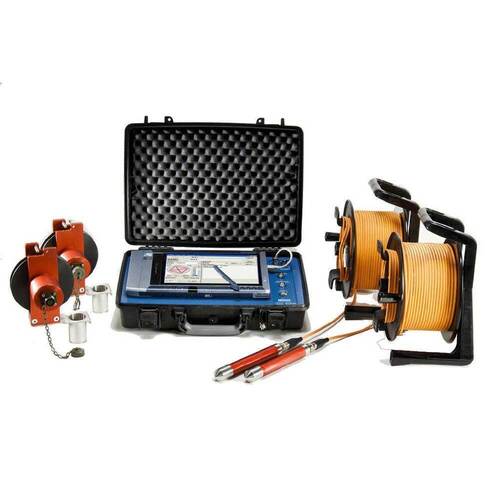
Tell us about your requirement

Price:
Quantity
Select Unit
- 50
- 100
- 200
- 250
- 500
- 1000+
Additional detail
Mobile number
Email

More Products in Civil Laboratory Testing Instruments Category
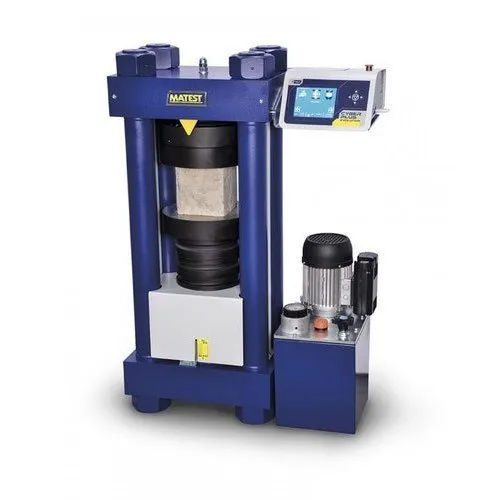
Concrete Testing Equipment
Price 230000 INR / Unit
Minimum Order Quantity : 1 Unit
Power Supply : Electric
Usage : Industrial
Color : Silver and Blue
Product Type : Concrete Testing Equipment
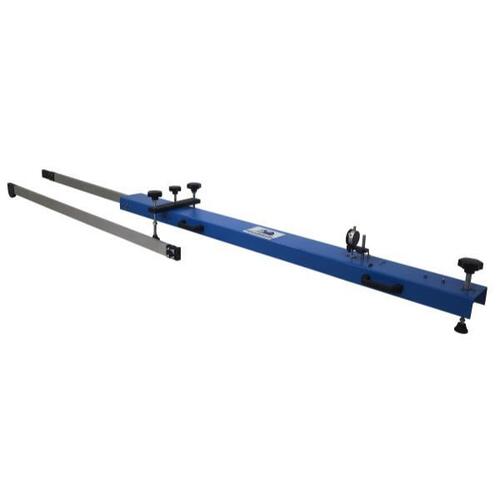
BANKELMAN BEAM APPARATUS
Price 20000 INR / Set
Minimum Order Quantity : 1 Meter
Power Supply : Not required (Mechanical device)
Usage : Civil Engineering, Road Construction
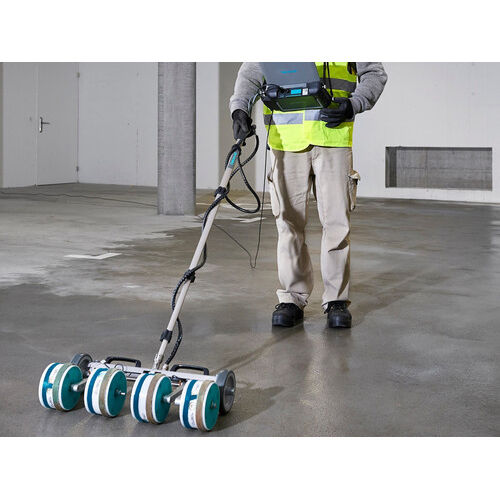
PROCEQ HALF CELL CORROSION TESTER
Price 500000 INR / Meter
Minimum Order Quantity : 1 Meter
Power Supply : 9V Battery (typical)
Usage : Onsite testing of reinforced concrete structures
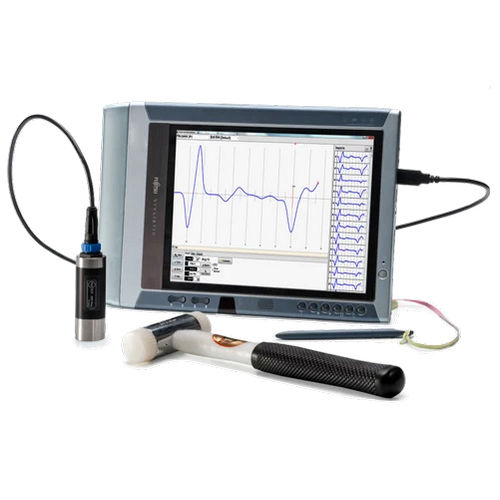
Pile Integrity Tester
Price 685000 INR / Unit
Minimum Order Quantity : 1 Unit
Power Supply : Electric
Usage : Industrial
Color : Silver
Product Type : Pile Integrity Tester

Contact Details

- 313/7, Nabapally, Nawbhanga, Salt Lake, Sector- 4,Kolkata - 700105, West Bengal, India
- Phone : 08045476896
ADRIJA SCIENTIFIC INSTRUMENT COMPANY
GST : 19EWWPD9150E1Z1
GST : 19EWWPD9150E1Z1

- Mr. Koushik Das (Business Head)
- Mobile : 08045476896
- Send Inquiry
 Send Inquiry
 Send Inquiry
 Send SMS
ADRIJA SCIENTIFIC INSTRUMENT COMPANY
All Rights Reserved.(Terms of Use)
Developed and Managed by Infocom Network Private Limited.
Developed and Managed by Infocom Network Private Limited.

